
How to Choose a Sectional Sofa That Fits Family Spaces
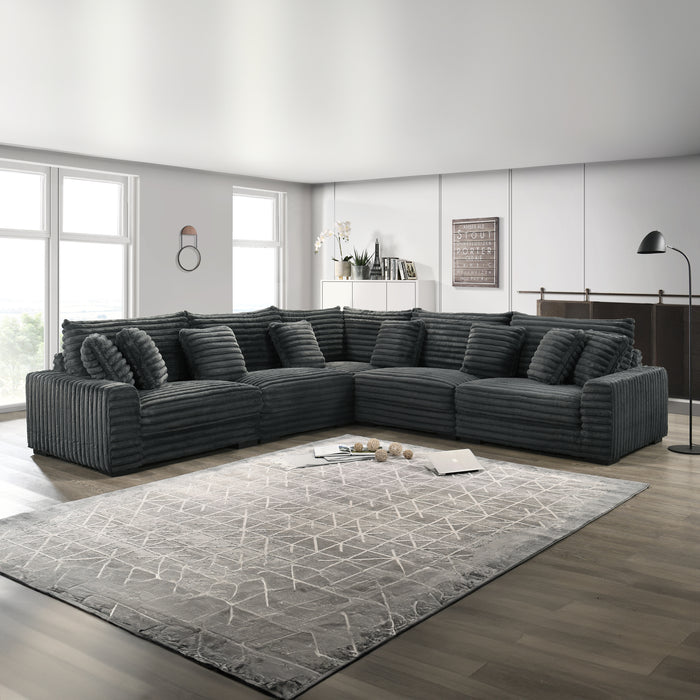
Picture this: it’s a typical evening in 2026. Your teenager is sprawled across one end of the sofa gaming, the dog is wedged between cushions, your partner is answering emails from a corner seat, and two kids are building a fort on the floor nearby. Tomorrow, you’re hosting twelve people for a watch party. This is modern family life, and the right sectional sofa can make all the difference.
When families ask how to choose a sectional sofa that fits family spaces, they usually start with wall measurements. But “fit” means much more than that. A sectional that truly works for your household fits three things: your lifestyle, your floor plan, and your daily traffic flow. Get one wrong, and you’ll either end up climbing over armrests to reach the kitchen or staring at empty seats nobody wants to use.
To ensure a sectional sofa fits well in your living room, start by measuring the room’s length, width, and height, as well as the locations of doors, windows, and any architectural features. But equally important is understanding how your family actually uses the space. When choosing a sectional sofa, consider how many people live in your household and how you typically use the space, as this will influence the size and configuration you need.
Sectional couches work best in main family rooms, open-concept living rooms that blend into dining or kitchen areas, basement rec rooms, and multi-use single living rooms where one space does everything. Throughout this guide, you’ll encounter terms like modular sectional, U-shaped sectional, curved sectional, maximum seating, floor plan, and focal point. Each plays a role in finding your perfect match.
What this article covers:
-
Mapping your family room and daily routines
-
Choosing the right sectional shape for your floor plan
-
Getting dimensions right for comfort without wasting space
-
Planning room layout with accent chairs and smart flow
-
Picking fabrics, colors, and features for real family life
-
Thinking long-term about flexibility, budget, and lifespan
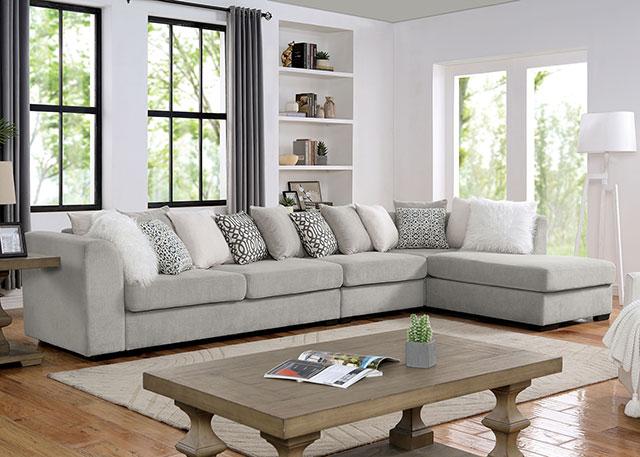
1. Map Your Family Room and Daily Routines First
Before browsing sectional layouts online, grab a tape measure. Poor sizing causes roughly 40% of furniture returns, and a sectional couch that looked perfect in the showroom can overwhelm or underwhelm your actual living space.
Start by measuring wall-to-wall dimensions. Common family rooms range from 13 feet by 18 feet (about 234 square feet) to larger spaces around 16 feet by 20 feet (320 square feet). Note every door swing, window placement, and built-in feature. Architectural features like a 30-inch door swing or a fireplace requiring 36-inch hearth clearance directly affect where your sectional can go.
Use painter’s tape to outline the footprint of the sectional on the floor, allowing you to visualize how much space it will occupy and ensuring you leave enough room for walkways. This simple trick reveals whether that 110-inch sectional actually works or whether it blocks the path to your hallway. Leave at least 30 to 36 inches of clearance for main walkways around the sectional to ensure comfortable movement and accessibility, especially in homes with kids navigating toys or pets underfoot.
When measuring for a sectional, ensure to account for the space needed between the sectional and coffee table, which should be around 18 inches for easy access. This creates knee clearance during use and lets people move through the seating area without awkward shuffling.
Next, identify your main focal point. In most family rooms, this is a TV wall (often mounted 42-60 inches from the floor), a fireplace, or a large picture window. The focal point dictates how your sectional should be oriented, data suggests optimal viewing angles fall within 30-40 degrees from the center seats.
Consider your household patterns:
-
Game-day families need 8+ seats facing the TV
-
Kids who sprawl with toys need open floor space (at least 8x10 feet play zones)
-
Gaming teens prefer deep chaise lounges for extended sessions
-
Work-from-home adults need upright seating with shallower seat depths for laptop use
Plan for the maximum seating you actually need most weeks, usually 4-6 seats daily, versus rare holiday gatherings of 8-12. An oversized sectional can reduce usable floor space by up to 30% in mid-sized rooms, leaving you with impressive seating nobody uses and no room for anything else.
2. Choose the Right Sectional Shape for Your Floor Plan
Shape affects usable seating more than raw dimensions. An L-shaped sectional can deliver 20-30% more conversational seating than a straight sofa in the same footprint, while a U-shaped sectional maximizes seats but demands more square footage.
In open-concept living rooms, common in 60% of homes built after 2010, your sectional shape defines zones without walls. In combined family and dining spaces, the right configuration creates separation while maintaining flow. The goal is avoiding “dead” corner seats that furniture ergonomics studies show go unused 70% of the time in family settings, while preserving 30-36 inch pathways.
The main shapes to consider: L-shaped sectional, U-shaped sectional, curved sectional, chaise sectional, and modular sectionals. Let’s break down each one.
L-Shaped Sectionals: Everyday Workhorse for Most Family Rooms
An L-shaped sectional combines a main sofa (typically 80-100 inches) with a perpendicular return (50-70 inches). L-shaped sectionals are the most popular choice for small to medium living rooms, providing ample seating without overwhelming the space. They account for roughly 45% of family room sectional sales.
This shape tucks neatly into corners, freeing central floor space for play, or floats in open floor plans with the long arm parallel to the TV wall. Specific room size guidelines: works especially well in rooms around 10 feet by 13 feet, up to about 14 feet by 18 feet.
L-shapes balance maximum seating with breathing room. You get 5-7 seats without dominating mid-sized floors, plus space for adding two accent chairs opposite the sectional when guests visit. This combination yields conversation-friendly seating without committing to a larger footprint.
Understanding orientation matters: left-arm facing (LAF) means the chaise or return sits on the left when you’re facing the piece, while right-arm facing (RAF) flips it. Choose based on your room layout. If your doorway is on the right, LAF ensures people can enter without climbing over seats. About 70% of layouts with adjacent hallways require this consideration.
L-shaped designs excel for families who watch TV daily but still want seating that supports conversation. They’re the everyday workhorse for most living rooms.
U-Shaped Sectionals: Maximum Seating for Large Families
A U-shaped sectional offers seating on three sides, typically formed by two sofas (80-90 inches each) bridged by a central piece. U-shaped sectionals are ideal for larger rooms and can comfortably seat six to eight people, making them perfect for gatherings and family events.
These work best in rooms measuring 13 feet by 18 feet and larger, or wide open-concept areas where the sectional can float away from walls. The U shape creates an intimate pit perfect for board games, family movie nights, and cozy conversation.
However, U-shaped sectionals can overwhelm long, narrow rooms. The enclosed feeling that makes them cozy can feel claustrophobic if the space between arms is under 72 inches. Expert designers note that while U-shapes boost perceived coziness by 25% through their enclosure effect, they require careful planning.
Spacing pitfalls to watch:
-
Coffee table access in the middle of the “U” needs 72-78 inches between arms for a 36-48 inch table
-
Maintain 30-36 inches of clearance behind and around the arms
-
Middle-access can feel tight if not properly spaced
In very large great rooms, a U-shaped sectional can define the family zone while leaving 10-15 feet of rear space for a dining area behind it.
Curved Sectionals: When Style and Flow Matter
A curved section features a gentle arc (typically 5-15 degrees spanning 120-160 inches) instead of right angles. This shape softens angular rooms and suits open layouts where the TV isn’t the sole focal point.
Curved sectionals are designed to promote conversation and flow in open layouts, making them suitable for spaces where seating needs to be defined without feeling boxy. They work particularly well in large family rooms of 16 feet by 20 feet or larger, especially those centered on fireplaces rather than TV walls.
Pair a curved sectional with a round or oval coffee table to preserve smooth circulation and avoid the stubbed-toe risks of right angles. Maintain 30-inch circulation radii around the curve.
The tradeoff: curved sectionals prioritize style and conversation over packing in maximum seating. They typically offer 5-6 usable seats compared to an L-shape’s 6-7 in identical rooms. In a 16-foot by 20-foot space, a curved sectional centered on a fireplace creates an elegant conversation area, while a TV-focused L-shaped layout would maximize viewing seats.
Choose curved when design impact and flow matter more than sheer capacity.
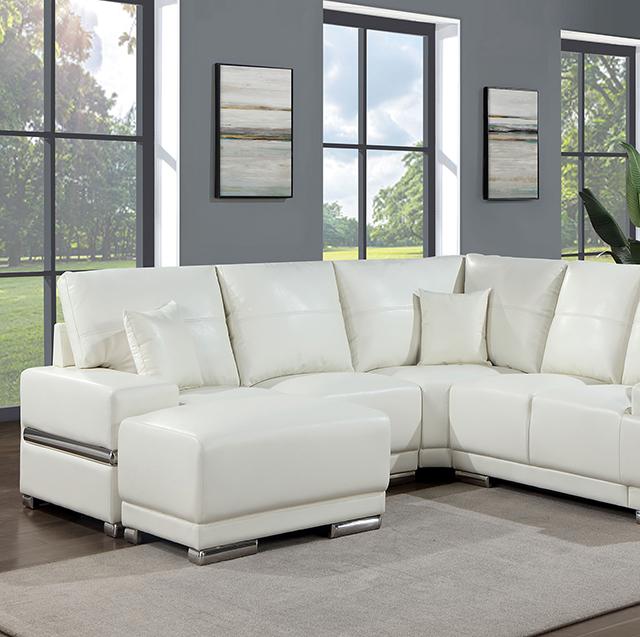
Chaise-End and Compact Designs for Smaller Family Spaces
Chaise sectionals combine a standard sofa with an extended lounge seat, providing a dedicated lounging area while still offering seating for conversation. This configuration shines in smaller family spaces like 12-foot by 15-foot apartments or multi-use rooms.
A typical compact sectional measures 75-90 inches for the sofa portion plus 60-65 inches for the chaise length, enough for full leg extension for adults up to 5’10” without cutting across the room’s main pathway.
Chaise sectionals work perfectly for single living rooms that must handle everything, TV watching, play, occasional overnight guests, but can’t accommodate a full U-shaped sectional. In tight spaces, a chaise style replaces a separate recliner, keeping the room feeling open rather than cluttered.
Consider this before/after comparison: a traditional 84-inch sofa plus a 36-inch-deep recliner consumes about 10 feet of width. A chaise sectional achieving a similar lounging function takes roughly 8 feet, opening up 25% more play area for kids. That floor space makes all the difference in a smaller room.
Modular Sectionals: Future-Proofing for Growing Families
Modular sectionals consist of individual pieces that can be rearranged to fit different layouts, making them versatile for changing needs and spaces. These systems include separate units, corners, armless chairs, chaises, ottomans, typically 24-36 inches each, that clip together via hidden brackets.
Modular sectionals are built from separate units (corner, armless, chaise, ottoman) that can be rearranged, while fixed sectionals have pieces that connect in one specific layout. This distinction matters for families expecting changes: a new baby in 2027, teens moving out, possible relocation, or converting a playroom into a media room.
The flexibility is compelling: start with a 4-piece sectional sofa in a 13-foot by 16-foot family room (forming a 120-inch L), then expand to a 6-piece U-shape (160 inches) if the family room moves to a larger basement later. Adding an armless chair gives you additional seating without replacing the whole sectional.
Modular sectionals are ideal for expanding families or renters who may want to rearrange furniture layout over time. However, modular designs carry a 20-40% price premium and require planning. Measure for your maximum future configuration’s fit, including those 32-inch doorways and stairways, not just your current setup.
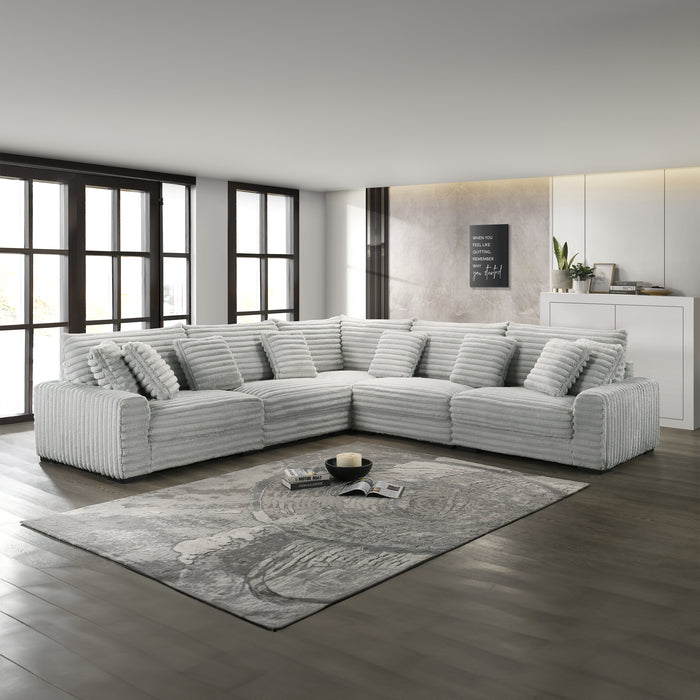
3. Get the Dimensions Right: Comfort Without Wasting Space
Beyond shape, specific dimensions, depth, height, and cushion layout, decide how many people actually sit comfortably on your sectional couch. Small sectionals typically measure 75 to 85 inches wide and are best suited for apartments and cozy rooms, while standard sectionals range from 95 to 115 inches and fit most living rooms.
Key measurements to understand:
|
Dimension |
Upright/Active Use |
Lounging/Relaxed |
|---|---|---|
|
Seat depth |
20-23 inches |
24-26 inches |
|
Seat height |
17-19 inches |
17-19 inches |
|
Overall back height |
32-36 inches |
32-38 inches |
Overly deep “sink-in” seats may feel luxurious in the showroom, but reduce usable seating for kids, grandparents, and shorter adults. An adult under 5’4” sinks 4-6 inches in a 26-inch deep seat, reducing posture support during TV watching or conversation.
Cushion layout also matters. More defined seat cushions (T-cushions) create clear seating positions; a 110-inch piece might offer 4-5 distinct seats. Long bench cushions blur boundaries, often yielding only 3-4 usable spots as people spread out. For families wanting more seating per inch, defined cushions win.
Compare two 110-inch sectionals: one with 12-inch wide rolled arms and three generous seats versus one with 5-inch slim track arms and four to five usable seats. The arm style alone changes your practical seating capacity by one or two people.
Seat Depth, Height, and Back Support for Real Families
Mixed-height households, say, parents around 5’5” and teens over 6’0”, should test seat depth differently for TV watching versus reading. A 22-inch depth suits both active viewing, but a 24-inch chaise provides lounging comfort for taller family members.
Medium back heights (approximately 32-36 inches overall) work best in multipurpose living rooms where the sectional serves TV watching, reading, and conversation. Higher backs can block natural light and sightlines in open spaces.
Balance deeper chaise or corner seats with standard-depth main seats. This way, everyone finds a comfortable spot without wasting space on universally deep seating that only suits lounging.
If your living area doubles as a home office where someone often sits upright with a laptop, prioritize 21-inch seat depths on main positions. Deeper seats encourage slouching during 4-hour work sessions.
Arm style affects both bulk and seating. Slim track arms (5-7 inches wide) yield roughly one more seat than rolled arms (10-12 inches) on the same overall length, worth considering if maximizing seating matters for your family gatherings.
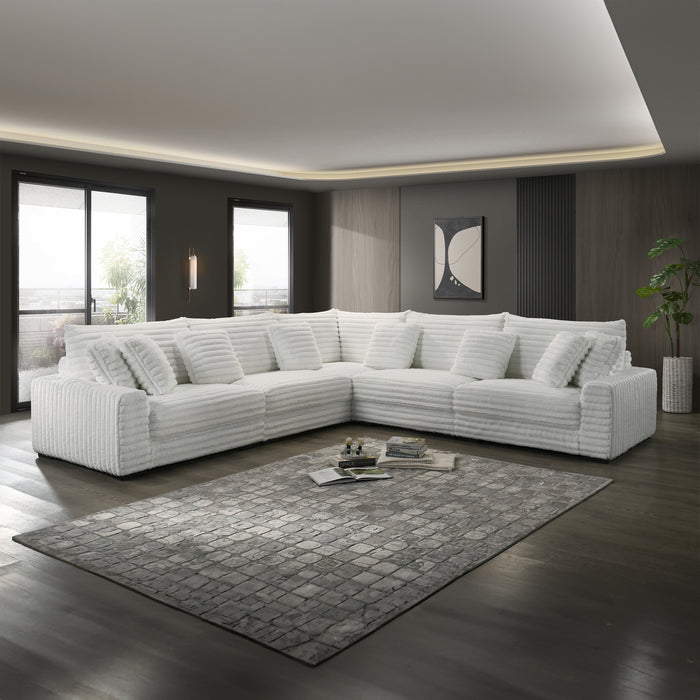
4. Plan the Room Layout: Sectional, Accent Chairs, and Flow
A sectional plays a central role in organizing your living space, but it should create flow rather than trap people. Maintain at least 30 to 36 inches of clearance for main walkways around and behind the sectional to ensure easy access to all seats and prevent crowding. Clear paths to doors, hallways, and stairs prevent the frustrating climbing-over-furniture experience.
Position the longest side of the sectional facing the main focal point of the room, such as a TV or fireplace, to ensure all seats have a comfortable viewing angle. This orientation ensures most seats feel intentional rather than awkwardly placed. For optimal 4K TV immersion, position viewing seats 8-12 feet from a 55-85 inch screen.
Using painter’s tape to outline the sectional’s footprint on the floor can help visualize the space it will occupy and assess traffic flow before making a purchase. When measuring for a sectional, it’s important to tape out the footprint on the floor to visualize the space it will occupy and ensure it doesn’t block walkways or doors.
To complete a conversation circle without overcrowding the floor plan, use two accent chairs or a pair of lounge chairs at the open end of the sectional. This strategy works across different spaces:
-
Single living room: L-shaped sectional with two accent chairs opposite
-
Separate family room: Larger U-shape with chairs flanking a fireplace
-
Open-concept living/dining: Sectional floating to define zones, chairs anchoring the conversation area
Sample layout walkthrough: In a 16-foot by 20-foot room with a centered TV wall, position a U-shaped sectional with the left arm at 90 inches and right arm at 90 inches, connected by a center wedge. Place two accent chairs opposite the TV, with a 42-inch coffee table centered in the U. This configuration flows 10 guests seamlessly while maintaining 36-inch paths to the stairway behind.
Align With the Focal Point Without Sacrificing Seats
Choosing a sectional that matches your lifestyle involves considering the activities you do most often in your living room, such as watching TV, entertaining, or relaxing, to ensure it meets your needs. Center the majority of seats toward your main focal point while avoiding long runs of side-facing seats that no one uses on movie nights.
In some floor plans, subtle angling of the sectional, 10-15 degrees, improves viewing angles and traffic flow simultaneously. This works particularly well in dual-focal rooms common in homes built after 2015, where a TV wall and fireplace compete for attention.
Consider this scenario: your sectional face points toward the TV, but there’s a fireplace on an adjacent wall. Angling the sectional creates comfortable sightlines to both without dedicating half your seats to a single view.
Window glare affects TV watching comfort. Position your sectional so the afternoon sun doesn’t wash out the screen; sometimes shifting the entire arrangement 30 inches solves the problem. Natural light matters for daytime use, so balance viewing needs with room brightness.
When every seat feels intentional and has a clear purpose, whether facing the TV or angled for conversation, your living space feels complete rather than cobbled together.
Using Accent Chairs and Ottomans to Boost Flexibility
Two accent chairs can round out maximum seating without committing to an oversized sectional. A sectional that’s too big can make a living room feel cramped and uncomfortable, while one that’s too small can create an awkward, empty space. Accent chairs bridge the gap.
Strategic chair placement options:
-
At the open side of an L-shaped sectional
-
Flanking a fireplace across from the sectional
-
Angled opposite a chaise to create a U-shaped conversation feeling
Lightweight ottomans or benches (around 30 by 18 inches) offer triple duty: footrests during TV watching, coffee tables with trays, and extra seating for kids during family gatherings. Side tables placed at sectional ends complete the functional arrangement.
Example layout for regular entertaining: An L-shaped modular sectional (110 inches plus 70-inch return), one 30-inch ottoman, and two 28-inch accent chairs accommodate a family that regularly hosts 8-10 people. Daily use: a family of four spreads across the sectional. Guest mode: add the chairs and ottoman for comfortable, defined seating.
A sectional should accommodate the daily users in your home while still providing enough flexible seating for guests during gatherings, ensuring it fits your lifestyle. Moveable pieces make it easier to rearrange furniture for kids’ birthday parties, game nights, or holiday dinners, far simpler than wrestling a 200-pound sectional into a new position.
5. Pick Fabrics, Colors, and Features for Real Family Life
In busy family rooms, durability and easy maintenance trump trendiness. Performance fabrics have evolved to resist stains and abrasion while remaining comfortable against the skin, making them ideal for busy households with kids and pets.
Performance fabric options rated for 50,000+ double rubs dramatically outlast standard cotton (10,000 rubs) and maintain appearance under daily family assault. For families and pet owners, tightly woven fabrics like performance polyester or microfiber are recommended as they are durable, stain-resistant, and easy to clean.
When selecting fabrics for a sectional, consider how they will wear over time; performance fabrics and tightly woven materials are preferable for high-traffic areas to avoid wear and tear. Avoid loose weaves that snag on toys and pet claws.
Color strategy matters. Choose a sectional color that anchors the room while letting accent chairs, throws, and pillows carry seasonal color and pattern. This approach lets you refresh the room’s look without replacing your main investment.
Useful features to consider:
-
Removable cushion covers: Beneficial for households with kids and pets, as they allow for easy washing and maintenance, encouraging the use of all seating areas without worry
-
Reversible seat cushions: Extend lifespan 2-3 years by rotating wear
-
Storage chaises: Internal 4-cubic-foot bins aid toy management
-
Sleeper sectionals: Useful for guest rooms, but add 10-15% bulk; consider tight spaces carefully
-
Reclining sectionals: Built-in recliners offer lounging luxury, but increase mechanism complexity
Note that sleeper sectionals and reclining sectionals increase sectional size and weight. In tight spaces, these features may hurt the room layout more than they help.
Family-Friendly Fabrics and Colors
Mid-tone neutrals, warm gray, taupe, oatmeal (light reflectance value 40-60), perform well in busy family rooms under both real daylight and evening lamplight. They hide everyday stains better than very light beiges (which show dirt) or deep charcoals (which can make a room feel cramped by darkening it 10-15%).
Avoid ultra-light fabrics if you have toddlers or frequent snack spills. That gorgeous cream sectional becomes a stress point rather than a comfort zone.
Before committing, order or borrow fabric swatches and view them at different times of day against your existing rugs and paint. What looks perfect under showroom lighting may clash with your afternoon sun or evening lamps.
A dark charcoal sectional versus a soft beige sectional affects more than aesthetics; charcoal anchors dramatically, but can make a smaller room feel smaller, while beige brightens but shows every crumb. For most family rooms, landing in the middle (warm gray, greige, soft taupe) balances room feel with practicality.
Let accent chairs carry bolder color and pattern. Your main sectional stays versatile for years while pillows and chairs evolve with your taste.
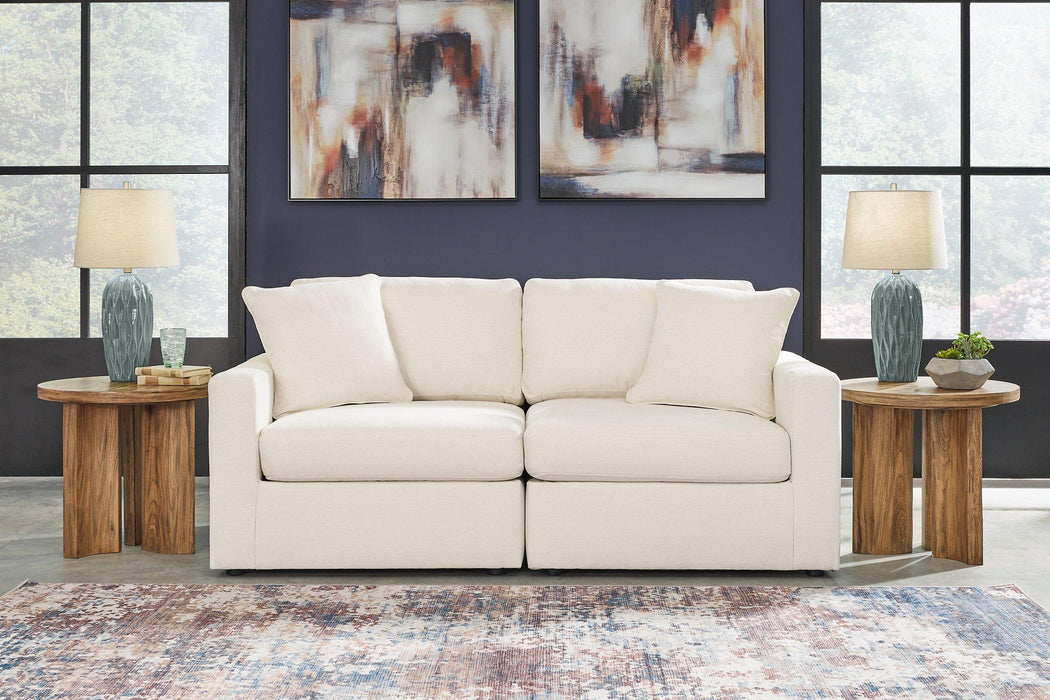
6. Think Long-Term: Flexibility, Budget, and Lifespan
A sectional bought in 2026 should still suit your family in 2031, even if your floor plan, kids’ ages, or lifestyle evolve. About 40% of families relocate every 5-7 years; your perfect sectional should handle that transition.
Choosing between a modular and fixed sectional depends on whether you expect to move or grow your family, as modular options provide more future-proofing. Fixed sectionals usually win on simplicity and cost, while modular sectionals excel in flexibility and adaptability for changing needs. If you’re settled in a forever home with a stable room layout, fixed works fine. If change is likely, modular designs justify their premium.
Balance the budget with construction quality. Kiln-dried hardwood frames with reinforced corner blocks outlast plywood (which sags 20% faster under daily family use). Eight-way hand-tied springs provide durability that cheaper zigzag springs can’t match. Cushion cores matter too; high-density foam wrapped in down maintains shape; pure foam compresses over time.
Aim for at least a 7-10 year lifespan in your main family room. Better materials and modular designs pay off through years of daily use. A $4,000 sectional lasting 10 years costs $400/year; a $2,000 sectional collapsing after 4 years costs $500/year, and the hassle of replacement.
To ensure a sectional fits well, it’s recommended to leave 30 to 36 inches of clearance for walkways and 18 inches between the sectional and coffee table. But fit isn’t just about your current room; measure twice, order once, and revisit doorways, stairways, and elevator clearances before finalizing. That gorgeous sectional arriving in pieces that won’t fit through your 32-inch doorframe creates an expensive problem.
Key long-term considerations:
|
Factor |
Fixed Sectional |
Modular Sectional |
|---|---|---|
|
Initial cost |
Lower |
20-40% higher |
|
Reconfiguration |
Not possible |
Easy |
|
Moving flexibility |
May not fit the new space |
Adapts to new layouts |
|
Adding pieces later |
Not possible |
Often available |
|
Frame complexity |
Simpler |
More connection points |
Industry trends point toward a 30% rise in eco-friendly modular designs by 2030, with AI floor-planning apps now simulating fits with 95% accuracy. Technology helps, but nothing replaces measuring carefully and planning thoughtfully.
The perfect sectional isn’t about following trends; it’s about understanding how your family actually lives. Start with your room measurements, test your layout with painter’s tape, and choose quality materials that maintain comfort under years of movie nights, game days, homework sessions, and lazy Sunday lounging.
Your family room is where life happens. Make sure your sectional sofa is ready for all of it.
Get Sectional Sofa Furniture at Discount Mattress & Furniture Today
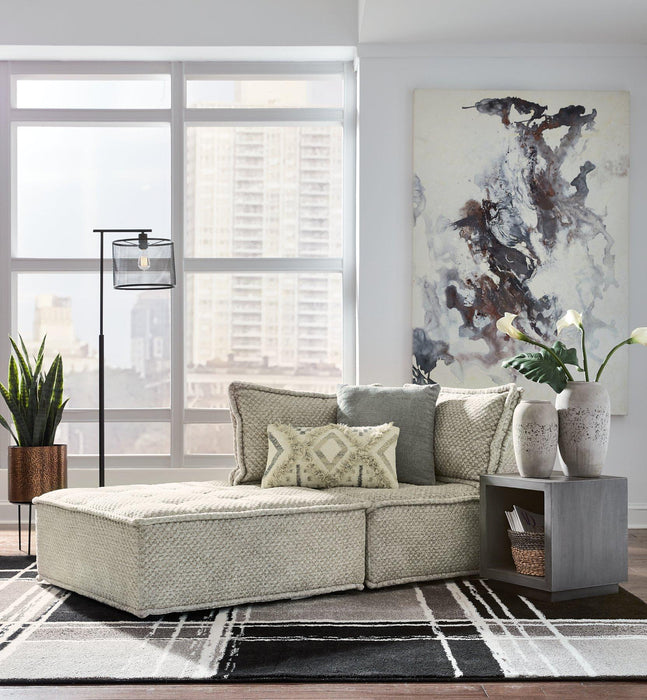
Upgrade your living space with sectional sofa furniture at Discount Mattress & Furniture today and create a comfortable and functional area for relaxing, entertaining, and everyday living. Sectional sofas are designed to provide flexible seating arrangements, making them ideal for both large open rooms and smaller living spaces. With a variety of styles, sizes, and configurations available, it is easier to find a setup that fits your home and lifestyle.
Now is the perfect time to refresh your living room. Get sectional sofa furniture at Discount Mattress & Furniture now and create a space where comfort, style, and practicality come together for you and your family.